


Solid Wall Insulation

How does it work?
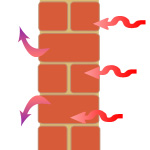
If you own a property with solid walls, up to 45% of the heat produced can be lost as it escapes through the external walls of your home. Insulating the walls can dramatically reduce the amount of heat loss in winter, and minimise the amount of heat gain in summer.
Solid brick, solid stone, timber frame (pre 1944) and concrete constructed houses can all improve their thermal efficiency by either lining the interior of the external walls with a insulating material, or by rendering the outside walls with a protective insulating layer.
The efficacy of the insulation method will depend primarily on your budget, however even the cheapest forms of internal wall lining can still produce beneficial results and reduce your heating bills.
What to watch out for
The biggest insulation related problem encountered by owners of solid brick houses is damp. This arises when the house has been thoroughly insulated all over, with little or zero provision made for the house to be able breathe.
If the walls are not able to ventilate air properly, the act of insulating the walls can lead to increased levels of moisture within the building which may, over time, result in potential problems with damp.
It is therefore very important when considering having wall insulation fitted to ensure the walls are damp free, and that there is a reliable source of ventilation to allow air movement within the walls. This also means checking the damp proof course (d.p.c.) is intact all around the house, to prevent rising damp attacking the newly attached insulation.
Also ensure all essential ventilation openings, such as those providing combustion air or underfloor ventilation, and all flues in the cavity wall are checked. If adequate sleeving or other cavity closures are not present, installation should not proceed until these openings have been sleeved or otherwise modified to prevent blockage by the insulant.
Which Material?
A solid wall can either be insulated internally or externally. Either option will reduce heat loss and increase comfort in your home, therefore the decision as to which method to choose comes down to either your budget, any particular design or decoration aesthetics inside your home, or both.
Internal Insulation
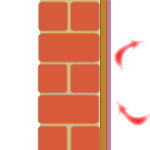
Internal insulation systems are usually mounted onto wooden studwork frames which are then plugged onto the wall. This leaves a gap between the insulation and the wall to trap warm, still air and effectively ‘double glaze’ your walls. The following materials are most common;
- A dry lining in the form of flexible thermal linings - available in 1m x 12.5m rolls.
- Laminated insulating plasterboard (known as thermal board).
- A built-up system of fibrous insulation such as mineral wool.
External Insulation

External insulation systems comprise an insulation layer fixed to the existing wall, and a protective render or decorative cladding over the top. Dry cladding the insulation can offer a wide range of finishes such as stone or clay tiles, brick slips or aluminium panels.
External insulation, although generally more expensive, is in most cases the more suitable solution to insulating a solid wall property as the process leaves the internal design and decoration completely unaffected. Also, if a room is relatively small in the first instance, internal methods will make the room smaller and they bring the walls closer together.
How much will it cost?
The costs can vary quite considerably depending on the particular method chosen to insulate the walls. As a general rule however, internal insulation systems are considerably cheaper than external cladding techniques. Regardless of which method you choose, it’s always advisable to obtain as many quotes as possible from specialist builders before deciding the best course of action.
The following is a rough price and savings guide for the most common insulation applications;
- Flexible Thermal Lining costs approx. £35 per SqM. Can save between £90 and £190 on average per annum on heating bills.
- Rigid Thermal Board costs approx. £40 per SqM. Can save on average between £210 and £260 per annum on heating bills.
- External Cladding/Render costs from £2,000 upwards depending on size of house. Typical annual savings are on average between £220 and £270.
Can you DIY?
Assuming that all damp problems have been fixed, if you are fairly comfortable putting up plaster board etc then applying internal insulation to the outside walls of your property should be a fairly straightforward process. However if in any doubt it is advisable to contract a specialist builder to carry out the work for you.
External insulation systems are a much more complicated process and involve handling of specialist insulating materials. As such it is advisable to contract a specialist insulation builder to carry out any work for you.
- Any contractors you hire to carry out solid wall insulation work should be registered with the National Insulation Association, which covers you if any damage occurs during the installation.
Further information and useful links
- Introduction to wall insulation
- Cavity wall insulation
- Full guide to the building regulations
- Making structural changes to your property
- Successfully damp proofing your home
- More walls and ceilings topics
- Building works topics
- Find a Insulation Installer near you
- Find a Builder near you
- National Insulation Association
- Energy Savings Trust (est.org.uk)
- Cavity Insulation Guarantee Agency (ciga.co.uk)
- Building Regulations an explanatory booklet (odpm.gov.uk)
- Party Wall Guidance (rics.org)
- Impact of the Party Wall Act 1996 (communities.gov.uk)
Site Pages
Featured Articles